What a Reporter Can Learn from a Public Meeting
Learn how to read a public meeting agenda, follow discussion and check the record so you can distinguish proposals, debate and decisions with confidence.

A clerk calls the next item, a councillor asks a question, and someone in the gallery starts packing up. It can look as though a decision has been made. To understand what happened at a public meeting, follow the agenda, discussion and formal record separately.
An agenda describes what a body expects to consider; speeches reveal what people said; a vote or other formal action establishes what the body did. These stages can diverge, and the difference may be the most important fact in a meeting story.
Read the agenda as a map, not a verdict
Find the agenda on the authority’s website or in its published meeting papers. Check the meeting date, the body’s name and whether the document is marked as revised or supplemental. A committee, full council and planning board may discuss related matters but have different powers, so identify which body is meeting before attributing authority to it.
Read the item title, staff report and attached documents. Look for the action requested: approve, recommend, receive, refer, amend or note. A committee asked to recommend a change may not have the power to adopt it; a report presented for information may be discussed without a decision being sought.
Notice whether the papers describe a proposal, a recommendation or a decision already made elsewhere. An agenda indicates what officials intend to put before the meeting, not what members will do. Treat it as a forecast of business rather than evidence that the listed action has occurred.
Before the meeting, write down the item’s exact title, requested action, named decision-maker and any document to check afterwards. If the item changes, this note gives you a clear point of comparison.
Establish the meeting’s authority and procedure
Rules shape what a discussion means. The meeting notice, standing orders or procedural guide may explain who can move a motion, how amendments are handled, what counts as a vote and whether a recommendation must go to another body. Rules differ between authorities and jurisdictions, so consult the relevant official documents rather than assuming one council’s procedure applies elsewhere.
Check whether the item is considered in open session, in a permitted closed session or in both. If members leave the room or the public is asked to leave, distinguish what you observed from what you could not hear or verify. Do not treat an agenda label or later rumour as a record of private discussion.
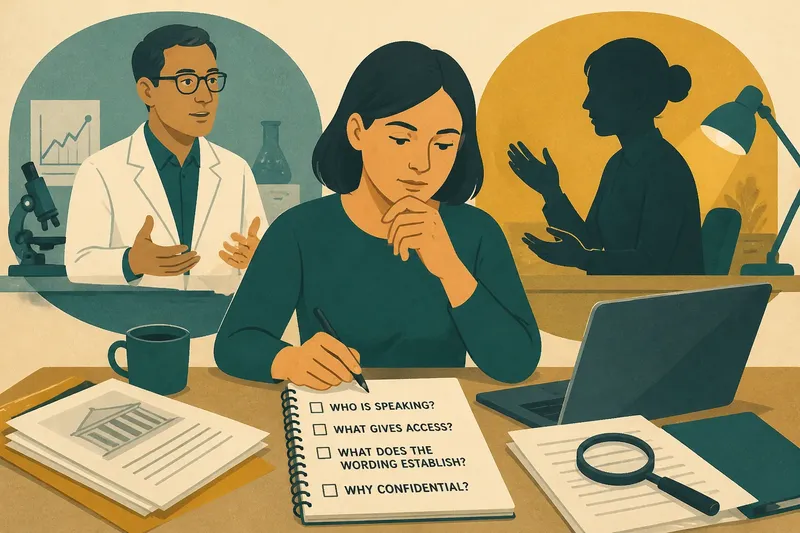
Pay attention to who is speaking and in what capacity. A staff member explaining a report is not necessarily speaking for the elected body; a resident’s public comment is not itself a motion; and a chair’s summary may clarify procedure without deciding the matter. Attribute statements to their speakers, and identify institutional decisions only when the body has taken them.
Follow each item through the discussion
When an item begins, note its number and the chair’s description. Compare the wording with the agenda. A changed recommendation, late amendment or staff clarification can alter what members are considering, even if the item keeps its original title.
Record the sequence: who introduced the item, what motion was made, whether it was seconded where required, what amendments were proposed and how the chair put the final question. Keep the wording as close as possible. “Approve the plan subject to revisions” may leave important details unresolved; the motion and its conditions matter more than a broad paraphrase.
Separate claims in the discussion from actions by the body. A member may say a project will reduce traffic while another disputes the prediction. That exchange establishes that the claim was made and contested, not that either account has been demonstrated or adopted. If the claim matters to the story, identify the report, data or authority the speaker invokes and check that material separately.
Listen for what is absent without turning silence into evidence. A question may go unanswered, a motion may not be brought forward, or the chair may defer an item. Describe the observable event precisely: say the item was postponed rather than implying that members rejected it.
Say you are covering a planning committee considering a proposed cycle lane. A member moves to recommend approval; another proposes an amendment asking staff to report back on loading access; the chair then postpones the vote because the motion’s wording remains unclear. Your notes support a report that the committee debated the proposal and deferred a decision, not that the lane was approved or rejected.
Trace motions, amendments and votes
A meeting can contain several motions on one agenda item. Note whether an amendment changes the main motion, replaces it or is considered separately, then establish what happens to each. An amendment may pass while the amended motion fails, or a motion may be withdrawn before a vote. Reporting only that “the amendment passed” can leave readers with the wrong impression about the proposal.
Watch for the chair’s declaration of the result and, where available, the recorded vote. A show of hands, voice vote and roll-call vote leave different kinds of evidence. If the result is unclear from the room, say so and check the official record rather than guessing from applause, hands you could not count or members beginning to leave.
Distinguish a majority vote from unanimous agreement. If minutes list names or a vote count, use that record and make clear what was voted on. A vote to receive a report, refer a proposal or recommend action is not the same as a vote to enact the policy described in the report.
Record the chair’s outcome language where possible: carried, defeated, referred, deferred or tabled. These terms may have specific procedural meanings. If the chair says an item is carried subject to a later legal review, include the condition and avoid presenting the result as unconditional.
Use a concrete check after the meeting
Locate the minutes, decision notice, resolution or other formal record. Minutes may be published later and may summarise rather than transcribe discussion. Check whether they are draft or approved. A recording or webcast can help clarify what was said, but the authority’s rules determine which document records the formal action.
Compare the record with your notes on the motion, amendments, vote and conditions. If the wording differs, identify the discrepancy and seek clarification from the clerk or relevant officer. Do not silently merge an uncertain memory with a later summary; tell readers which source establishes the decision and which captures the discussion.
- Check the agenda’s item title against the chair’s description; if they match, use the agenda wording as a reference, but if they differ, note the change and verify which proposal was considered.
- Check the motion’s exact wording against your notes; if the record confirms it, report the motion, but if wording is missing or unclear, seek clarification from the clerk before paraphrasing its effect.
- Check whether an amendment was proposed and what happened to it; if it was adopted, explain how it altered the motion, but if it was withdrawn or defeated, do not describe it as part of the final decision.
- Check the chair’s declared result against the minutes or decision notice; if they agree, report the outcome, but if they conflict, describe the discrepancy and ask the responsible officer to clarify it.
- Check whether a vote was recorded and what it concerned; if the record identifies the motion and result, report those details, but if it does not, avoid inferring unanimity or the vote’s effect.
- Check for conditions, referrals or further approvals in the formal record; if another action remains, state what is still pending, but if no further step is recorded, do not invent one.
Check what happens next. The decision may require another body’s approval, publication of a final document, a funding decision or a further public meeting. Find the responsible office and any stated next action in the papers. A request for more information is not final adoption, even if participants speak as though the outcome is settled.
Where a decision has legal, planning or financial consequences, explain its recorded status in plain terms and avoid offering personal legal or financial advice. Specialist interpretation may require a qualified professional.
Write the account in the order readers need
Lead with the formal outcome, if there is one, then explain the proposal and the discussion that led to it. Name the body, describe its action accurately and state any condition or next stage. If no decision was taken, make that clear near the beginning rather than letting the agenda’s proposed action stand in for the result.
Use attribution to separate the record from competing claims. “The committee deferred the vote” describes an action; “members disagreed over whether the plan would affect deliveries” describes debate. If a speaker made a factual claim, attribute it and identify what would be needed to verify it rather than adopting it as the story’s own voice.
Include discussion that helps explain the decision, disagreement or unresolved question. A long meeting does not require a long account of every intervention. It is not worth transcribing routine procedural exchanges that do not affect the outcome; preserve precise wording where a motion, condition or disagreement changes what readers should understand.
What should I check after a public meeting?
Can an agenda prove that a decision was made?
No. An agenda shows what was scheduled or proposed for consideration. Check the proceedings and formal record for evidence of what the body actually did.
Does a lively debate mean the proposal passed?
No. Discussion can end in approval, rejection, referral, postponement or no action. Follow the motion to the chair’s declared result and verify it in the record.
What if the minutes are not available yet?
Use contemporaneous notes and an official recording if one is available, while making the basis of your account clear. Confirm the motion and result with the clerk or responsible officer, and update the story if the formal record changes or corrects the wording.
How can I tell a recommendation from a final decision?
Check which body acted and whether its authority extends to the requested action. Look for terms such as “recommend” or “refer”, then trace whether another body must make the final decision.
For anyone asking what a reporter can learn from a public meeting, the useful sequence is what the papers proposed, what participants said, what motion reached a vote and what the official record confirms. Keeping those stages distinct also makes it easier to report what remains unresolved, rather than allowing a room’s confident mood to stand in for a formal decision.